CALI CLEAN TEAMDone Right
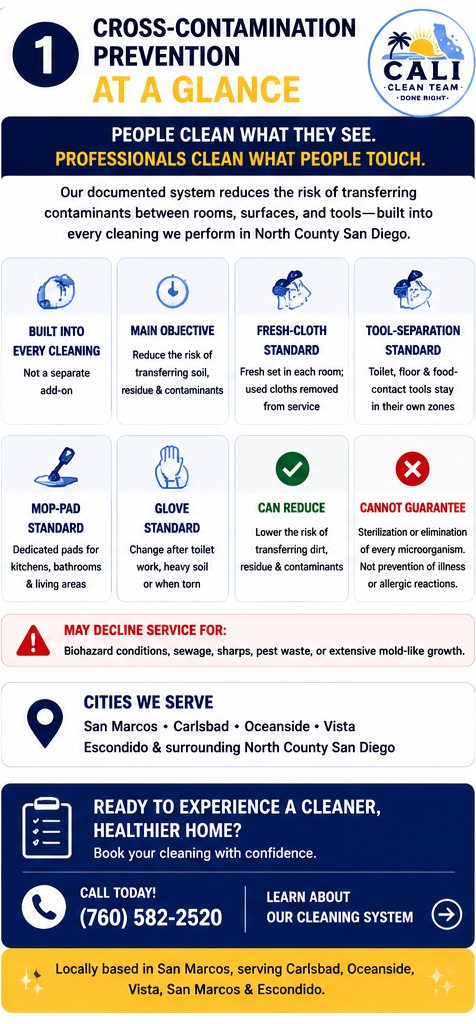
Cross-contamination prevention isn't a separate service — it's a system built into every cleaning we perform. Fresh microfiber towels for each room, dedicated mop pads, color-coded brushes, and disciplined attention to high-touch surfaces mean bacteria never travels from your bathroom to your kitchen.
Locally based in San Marcos, serving Carlsbad, Oceanside, Vista, San Marcos & Escondido.
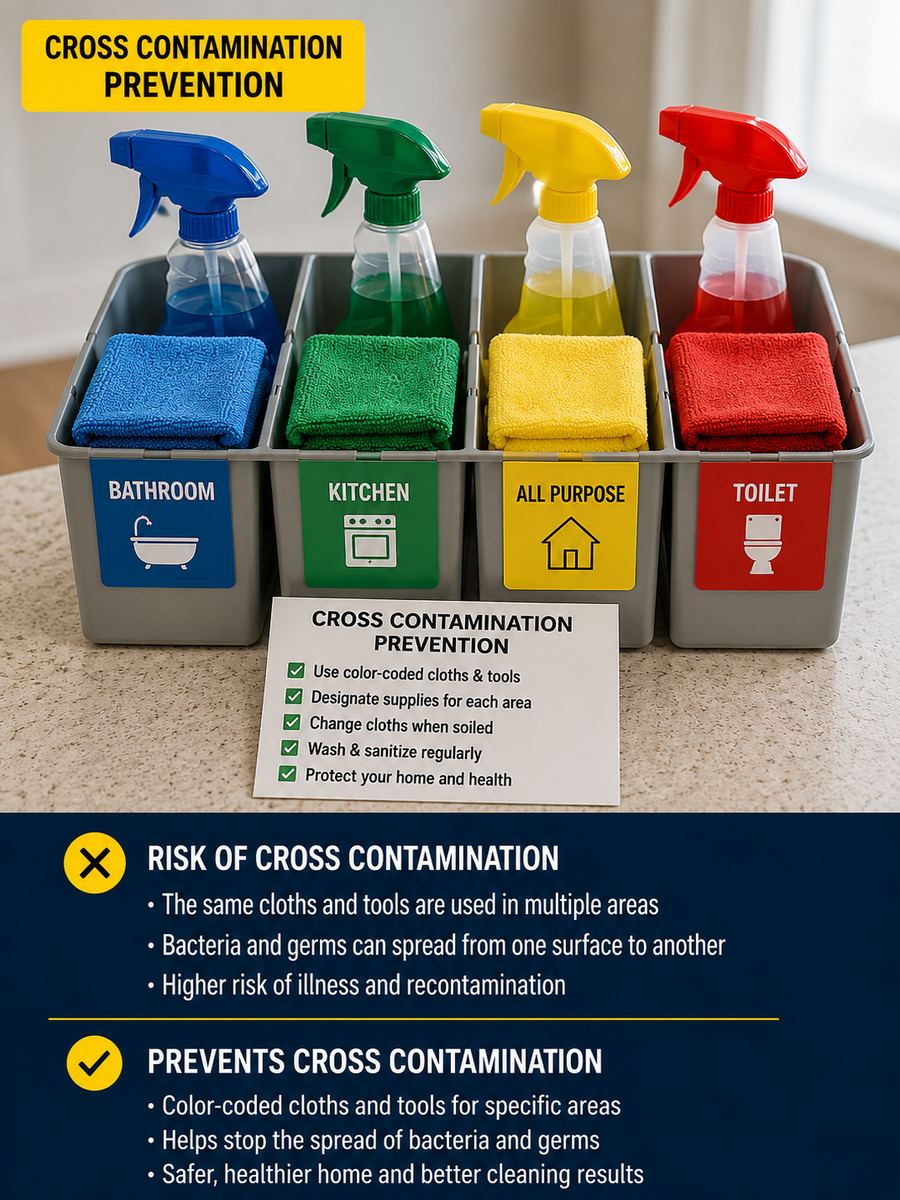
Homeowners often assume every cleaning company prevents cross-contamination. The reality is that many don't have a defined system at all — they simply hope it happens. At Cali Clean Team, cross-contamination prevention is built into every cleaning, not treated as an optional extra. The objective is simple: never transfer dirt, bacteria, or contaminants from one area of the home to another. This becomes especially important in homes where occupants may have allergies, compromised immune systems, or other health concerns — which is why we encourage customers to communicate any special health considerations before their appointment, so technicians can take additional precautions if appropriate.
1. Fresh microfiber towels for every room. Each room receives its own set of microfiber towels. When a room is finished, those towels are removed from service and placed into a designated laundry container — professionally laundered before returning to use — while fresh towels are used for the next room.
2. Separate mop pads. Bathrooms and kitchens never share the same mop pad. Dedicated pads are assigned for kitchens, bathrooms, and living areas, reducing the chance of transferring contaminants from high-risk areas into food preparation spaces.
3. Color-coded brushes. White brushes are reserved for food-contact areas and kitchen detailing. Black brushes are used for toilets and other non-food areas. The color coding makes it immediately obvious which tools belong where, reducing the chance of human error.
4. Gloves. Technicians wear gloves throughout cleaning to reduce direct contact with heavily soiled surfaces and maintain a hygienic workflow.
5. Professional tool cleaning. Microfiber towels are never reused from room to room — they're professionally laundered before returning to service.
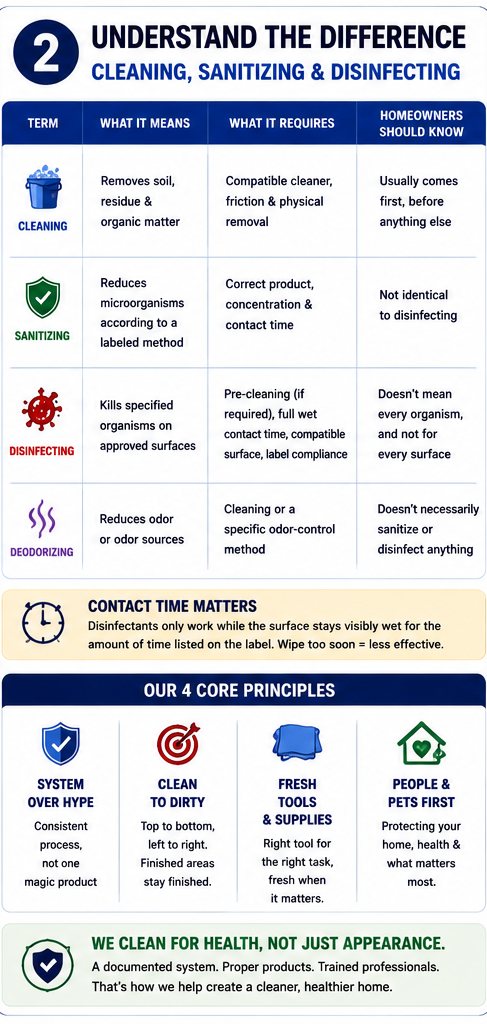
Cross-contamination isn't always visible. A towel can look perfectly clean while still carrying contaminants from another part of the home. That's why our procedures focus on changing tools, not simply rinsing them and continuing to clean.
The biggest source of cross-contamination isn't necessarily the toilet — it's the high-touch surfaces everyone forgets. Common mistakes include:
As we like to put it: people clean what they see. Professionals clean what people touch.
One of our most meaningful projects took place during the post-COVID era, cleaning the home of a customer with an autoimmune condition. Because the homeowner's health made infection control especially important, the homeowner provided a dedicated set of cleaning supplies — including their own microfiber towels — to be used only inside their home. They had organized those towels by color so each area of the home had its own designated cloths, reinforcing the same cross-contamination principles we already follow.
By respecting the homeowner's system and combining it with our own cross-contamination procedures, we were able to give both the homeowner and their caregivers confidence that every reasonable precaution was being taken. That experience reinforced something we believe strongly: cross-contamination prevention isn't just about cleaning correctly — it's about earning trust.
Unlike some of our other services, we haven't observed significant differences in cross-contamination concerns between coastal and inland homes or among different customer types — families with children, retired couples, vacation rental owners, pet owners, and busy professionals all receive the exact same standards. Rather than adjusting our process based on the home, we follow the same disciplined system every time, because bacteria and contaminants don't discriminate based on the type of customer or neighborhood.
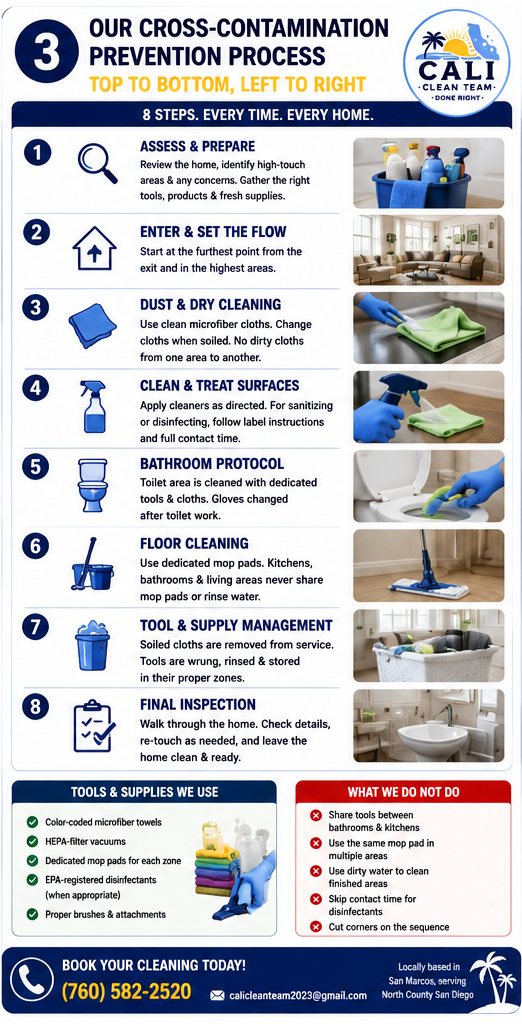
When customers hire Cali Clean Team, they're not hiring individual cleaners with different habits or personal preferences — they're hiring a team that follows the same proven system on every visit. Cross-contamination prevention isn't something technicians decide to do; it's built into how they're trained. Customers can expect every room to begin with clean tools, fresh microfiber towels used throughout the home, dedicated mop pads for different areas, color-coded brushes that prevent tools from being used in the wrong places, and cleaning materials handled in a way that minimizes the risk of transferring contaminants. These procedures aren't optional — they're the Cali Clean Team standard.
Cali Clean Team applies the same cross-contamination prevention system in every home throughout North County San Diego — Carlsbad, Oceanside, Vista, San Marcos, and Escondido alike. We haven't found meaningful differences in cross-contamination needs based on location or customer type; the standard is consistent because contamination doesn't care what zip code you're in.
No. Each room gets its own fresh set of microfiber towels, which are removed from service once that room is finished and professionally laundered before reuse.
Yes — dedicated mop pads for kitchens, bathrooms, and living areas, plus color-coded brushes (white for food-contact areas, black for toilets and non-food areas).
High-touch surfaces — light switches, door handles, doorknobs, cabinet pulls, faucet handles, and toilet flush handles — which is where contamination often travels between rooms.
Yes. We encourage customers to communicate special health considerations in advance, and we're willing to use customer-provided dedicated supplies when needed, as we've done before.
Yes, throughout the cleaning process, to reduce direct contact with heavily soiled surfaces.
No — it's built into every cleaning we perform, not a separate add-on service.
Want the full deep-dive? Read the Complete Guide to Cross-Contamination Prevention — our in-depth blog guide covering everything from common mistakes to real case studies.